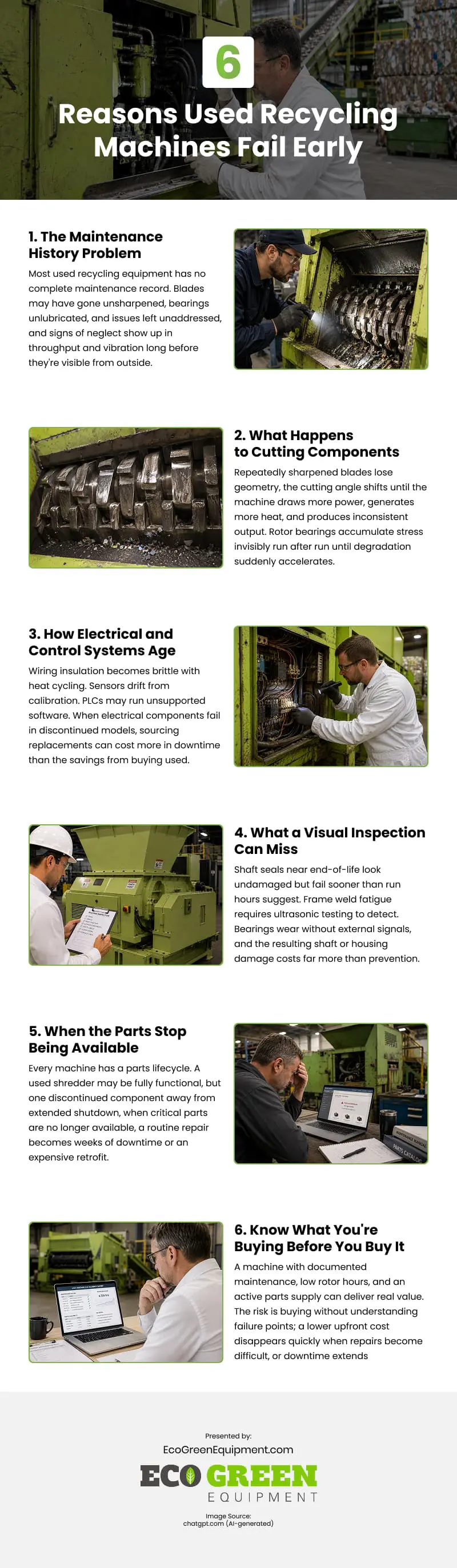
The price gap between new and used plastic recycling equipment is appealing, but used machines carry a history that listing details rarely reveal. Without a complete maintenance record, there’s no way to know whether blades were sharpened on schedule, bearings were properly lubricated, or alignment issues were addressed before they became structural problems. Cutting components are the most wear-intensive parts of any shredder or granulator; repeatedly sharpened blades lose geometry, and rotor bearings accumulate stress invisibly until degradation suddenly accelerates. Electrical systems age in ways that are harder to quantify than mechanical wear: wiring insulation becomes brittle, sensors drift from calibration, and PLCs may run software no longer supported by the manufacturer. Visual inspections miss shaft seals approaching end-of-life, fatigue cracks in frame welds, and bearing wear that shows no external signals until failure causes expensive secondary damage. And every machine has a parts lifecycle; a used shredder that appears fully functional may be one discontinued component away from weeks of downtime or a costly retrofit. A machine with documented maintenance history, low rotor run hours, and an active parts supply can still deliver real value; the risk is buying without understanding where the likely failure points actually are.
source: https://ecogreenequipment.com/why-used-plastic-waste-recycling-machines-fail-early/
Comments
Download this infographic.