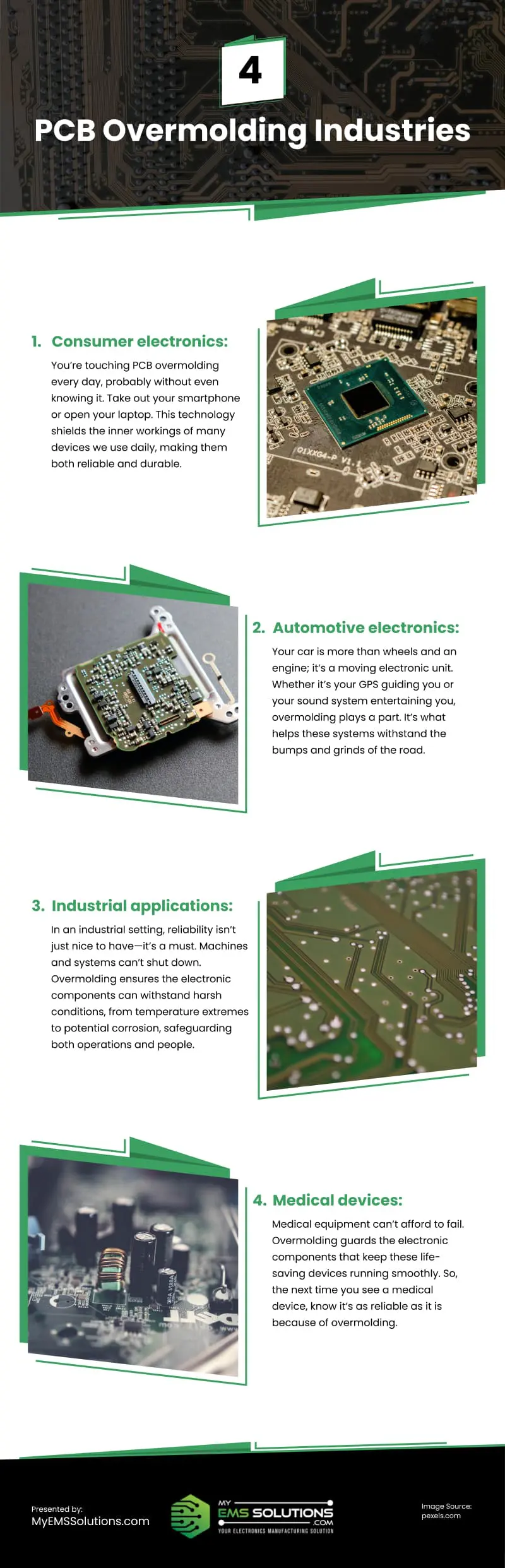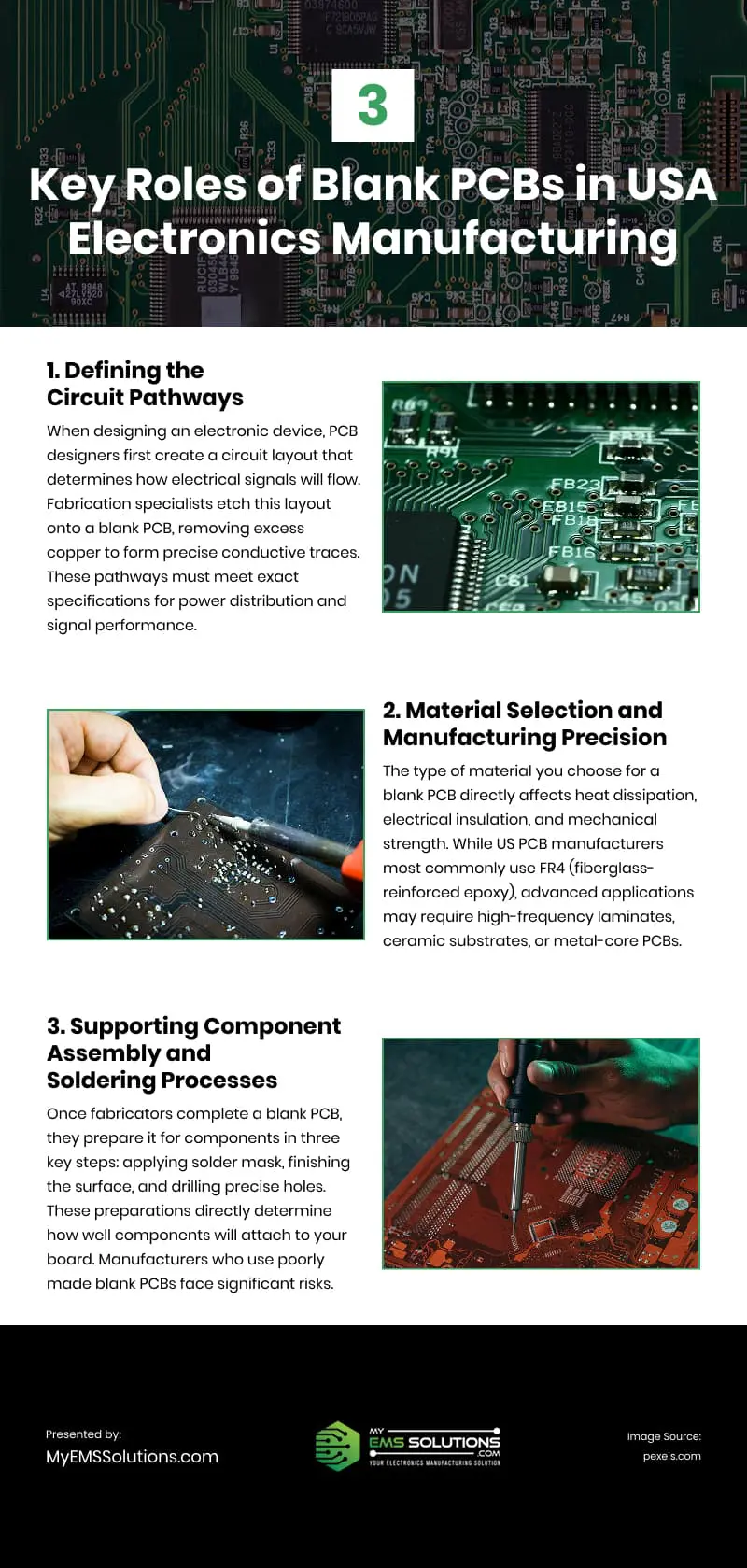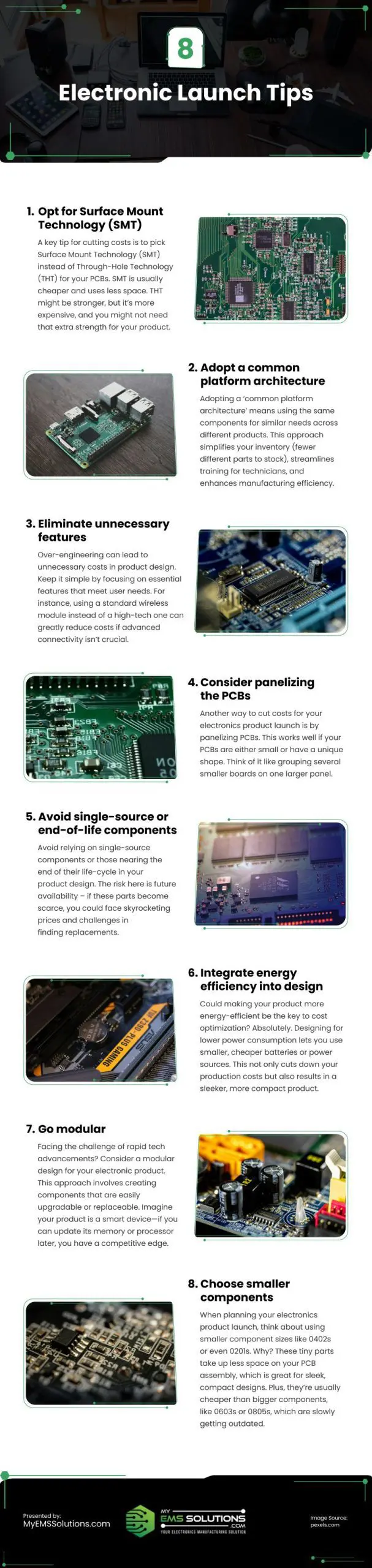
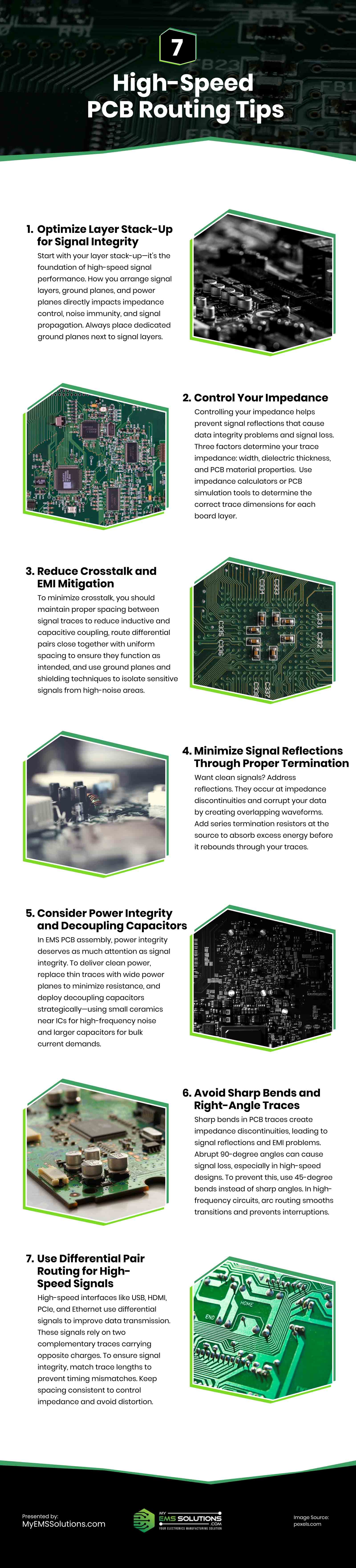
High-speed PCB design requires precise layout strategies to ensure signal integrity, prevent data loss, and avoid electromagnetic interference. As signal frequencies increase, the PCB becomes an active part of the circuit, making thoughtful routing essential. A well-structured layer stack-up is foundational—placing ground planes adjacent to signal layers helps control impedance and shield signals from noise. Impedance matching is critical to minimize reflections and depends on trace width, dielectric spacing, and material properties. Using calculators or simulation tools is a must. Crosstalk and EMI can be reduced by maintaining spacing between traces, routing differential pairs together with uniform spacing, and using proper shielding techniques. Termination resistors at the signal source absorb energy and prevent disruptive signal reflections. Power integrity also plays a big role—replacing narrow traces with power planes and placing decoupling capacitors near ICs ensures stable voltage delivery. Avoiding sharp bends, particularly 90-degree angles, helps reduce impedance disruptions; opt for 45-degree or arc routing instead. Finally, differential pair routing is essential for high-speed protocols like HDMI, USB, and PCIe—keeping trace lengths matched and spacing consistent ensures accurate signal timing and reduces distortion. These techniques form the backbone of high-speed PCB routing best practices.
source: https://www.myemssolutions.com/high-speed-routing-in-pcb-assembly-expert-tips-and-techniques/
Comments
Download this infographic.