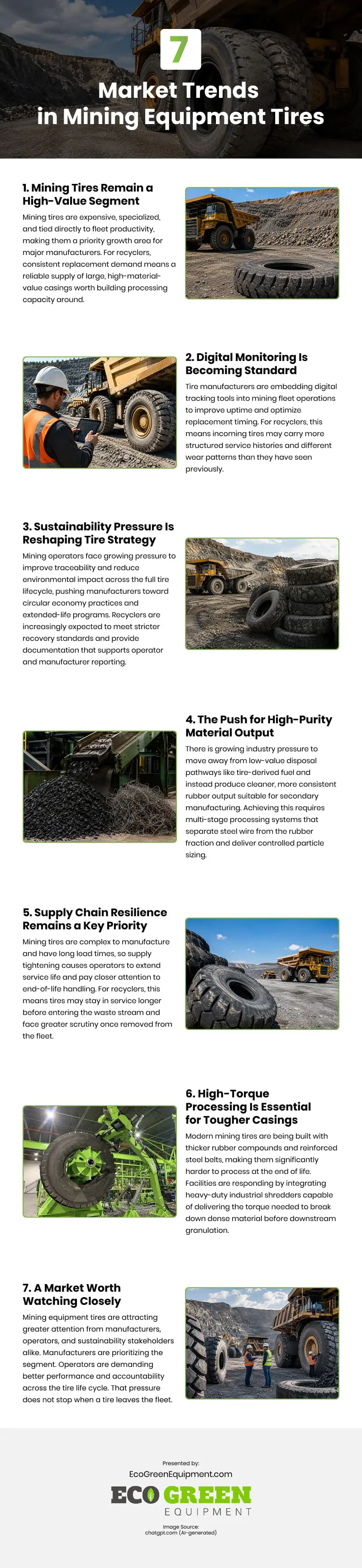
Mining equipment tires have become one of the most closely watched segments in both the tire manufacturing and recycling industries. Major manufacturers continue to treat ultra-large mining tires as a high-priority growth category, and consistent fleet replacement demand creates a reliable stream of large, material-rich casings for recyclers willing to build capacity around them. Digital monitoring tools are now being integrated across mining fleets, changing how tires are used and how they arrive at the recycling stage, often with more structured wear data and more predictable service histories. Sustainability requirements are intensifying across the full tire lifecycle, with operators and manufacturers alike pushing for greater traceability, responsible end-of-life processing, and documentation that satisfies tightening environmental reporting standards. At the same time, the industry is shifting away from low-value disposal options toward higher-purity recovered material streams, raising expectations for recyclers to invest in multi-stage processing systems that produce clean, consistent rubber output. Supply chain pressure is extending tire service life and increasing scrutiny over what happens to each casing once it leaves the fleet, every tire represents a more valuable asset in a tight market. Processing these newer, tougher casings also demands purpose-built equipment, with heavy-duty industrial shredders becoming a standard first step for facilities that handle reinforced steel belts and thick-compound mining rubber at scale.
source: https://ecogreenequipment.com/market-trends-in-mining-equipment-tires/
Comments
Download this infographic.