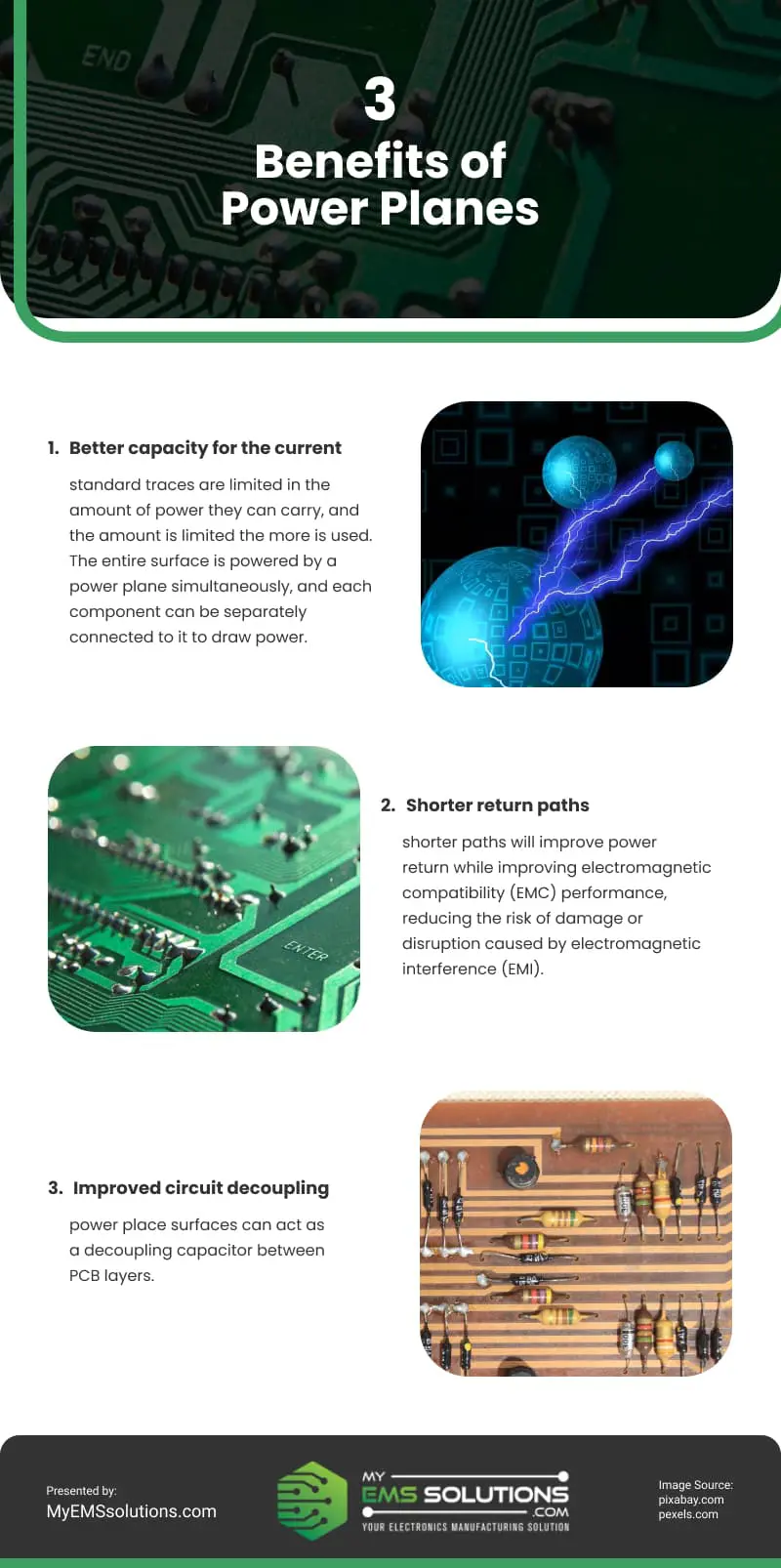
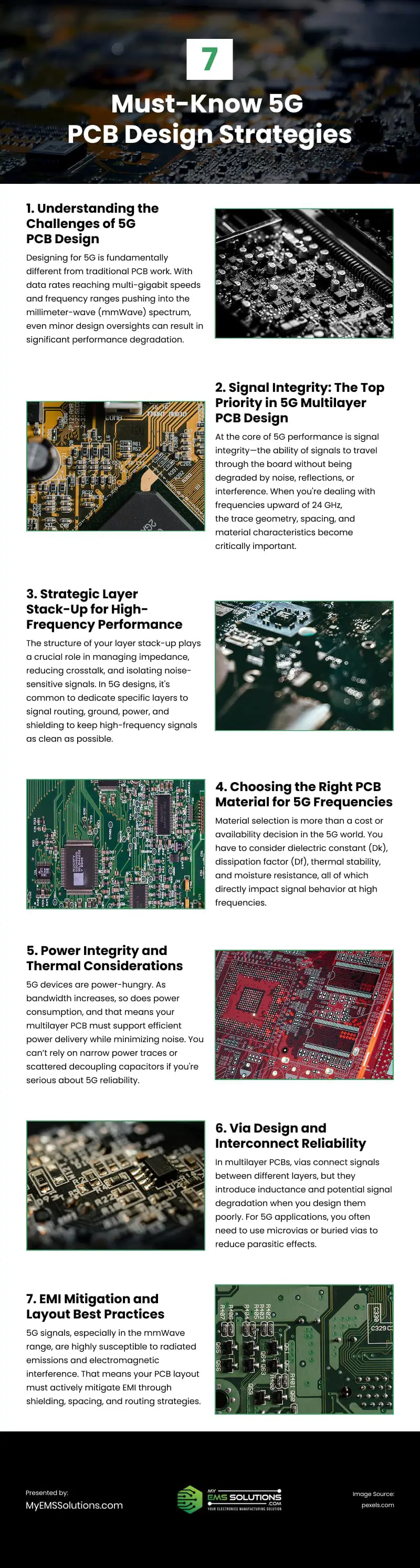
Designing multilayer PCBs for 5G technology requires precision and advanced strategies to meet the demands of ultra-high data rates and mmWave frequencies. Unlike traditional PCBs, 5G designs must prioritize signal integrity, as even the slightest noise, reflection, or interference can significantly impact performance. Careful attention to trace geometry, material properties, and routing ensures clean signal transmission. Layer stack-up strategy becomes essential, with designated layers for signal, power, ground, and shielding helping to manage impedance, reduce crosstalk, and isolate sensitive paths. Material selection is critical too—factors like dielectric constant, dissipation factor, thermal stability, and moisture resistance play a direct role in how signals behave at high frequencies. Power integrity is another major concern, as 5G devices demand efficient power delivery to support bandwidth without introducing noise; this calls for robust power plane design and strategic capacitor placement. Vias, the vertical connections in multilayer boards, must be carefully engineered to minimize inductance and parasitic effects, often using microvias or buried vias. Electromagnetic interference (EMI) poses additional challenges, especially at mmWave ranges, making layout decisions—like shielding and routing—vital for mitigating emissions. Overall, the right combination of materials, structure, and design techniques is essential for achieving reliable, high-performance 5G electronics.
source: https://www.myemssolutions.com/how-to-design-better-multilayer-pcbs-in-the-5g-era/
Comments
Download this infographic.