
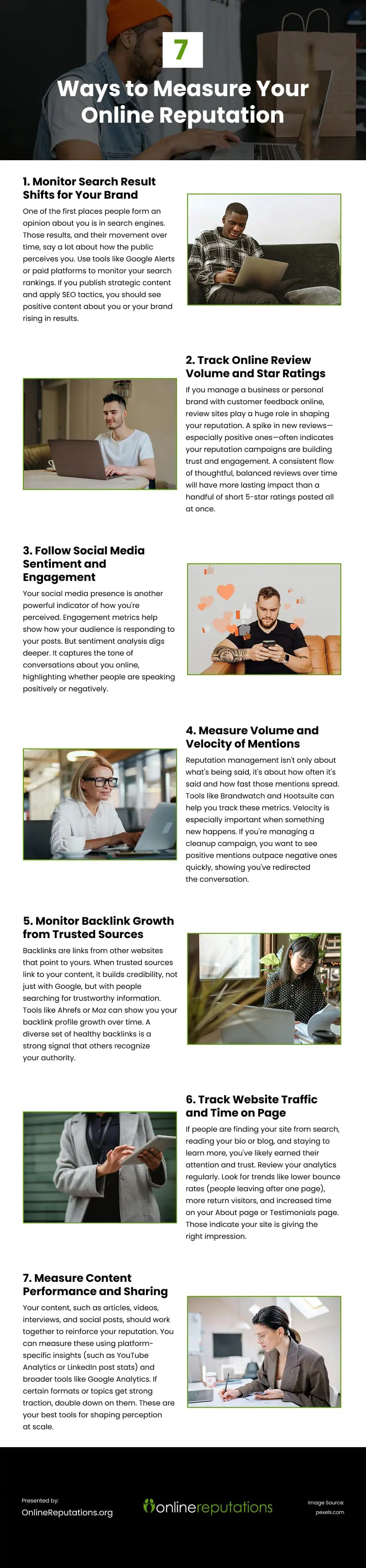
Effective online reputation management requires more than posting positive content—it depends on tracking the right data to understand how public perception evolves over time. Monitoring search engine results is a key starting point, as these listings often form first impressions and reflect whether positive content is gaining visibility. Online reviews also play a major role, with consistent, authentic feedback helping build long-term trust rather than relying on sudden spikes of high ratings. Social media provides another layer of insight, revealing how audiences truly feel about your brand through engagement metrics and sentiment analysis. Beyond tone, tracking how often your brand is mentioned and how quickly those mentions spread helps measure the momentum of your reputation, especially during active campaigns. Building credibility through backlinks from reputable sources further strengthens both search visibility and public trust. Website behavior offers additional clues: metrics like time on page, return visits, and lower bounce rates indicate whether visitors find your content valuable and trustworthy. Finally, evaluating how your content performs across platforms helps identify which topics and formats resonate most, allowing you to refine your strategy. By consistently measuring these factors, you can move from guesswork to a more strategic, data-driven approach that steadily improves your online reputation.
source: https://www.onlinereputations.org/7-ways-to-measure-your-online-reputation/
Comments
Download this infographic.