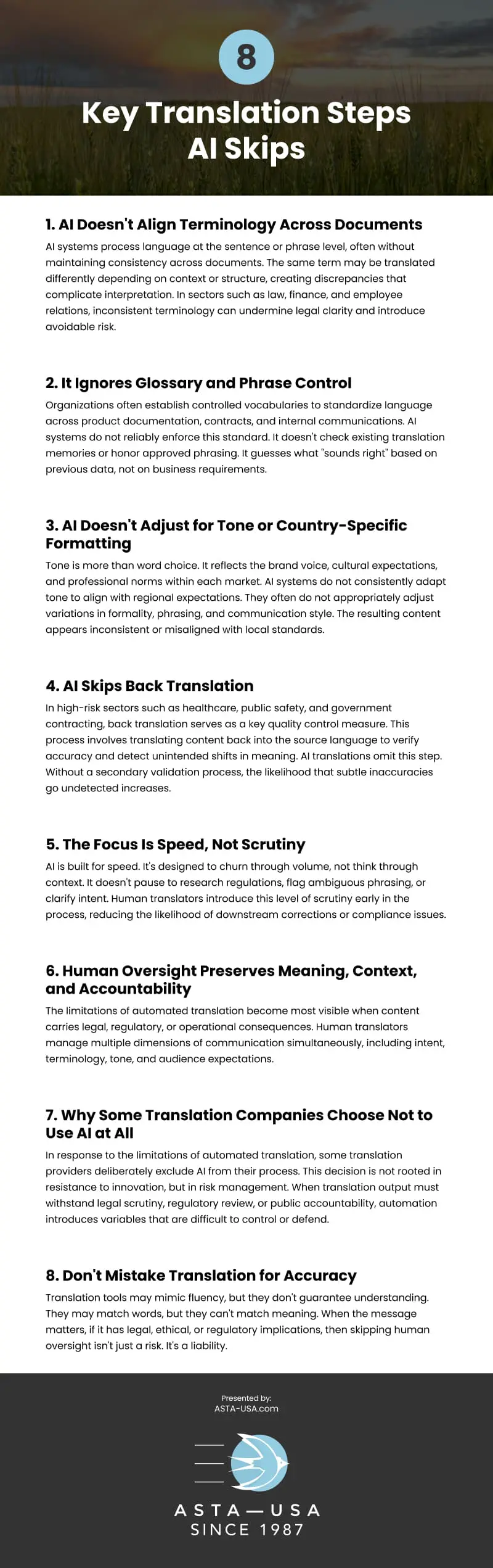
AI-driven translation offers speed and efficiency, but it often skips critical steps that ensure accuracy, consistency, and compliance, making it risky for high-stakes content. Automated systems tend to translate language at a surface level, leading to inconsistent terminology across documents and misalignment with established glossaries or approved phrasing. They also struggle to adapt tone, cultural nuance, and formatting to specific regions, resulting in content that may feel off-brand or inappropriate for local audiences. Important quality control measures, such as back translation, are typically omitted, increasing the likelihood that subtle errors or shifts in meaning go unnoticed. Because AI prioritizes speed over scrutiny, it does not evaluate context, research regulatory requirements, or flag ambiguous language, which can lead to costly misunderstandings. In contrast, human translators bring a deeper level of oversight, ensuring that meaning, intent, tone, and compliance standards are preserved throughout the process. This level of control is especially important in industries where accuracy carries legal, ethical, or operational consequences. For this reason, many organizations and translation providers continue to rely on human expertise to reduce risk and maintain accountability. Ultimately, while AI can assist with efficiency, true translation quality depends on human judgment and careful review.
source: https://asta-usa.com/key-translation-steps-ai-skips/
Comments
Download this infographic.