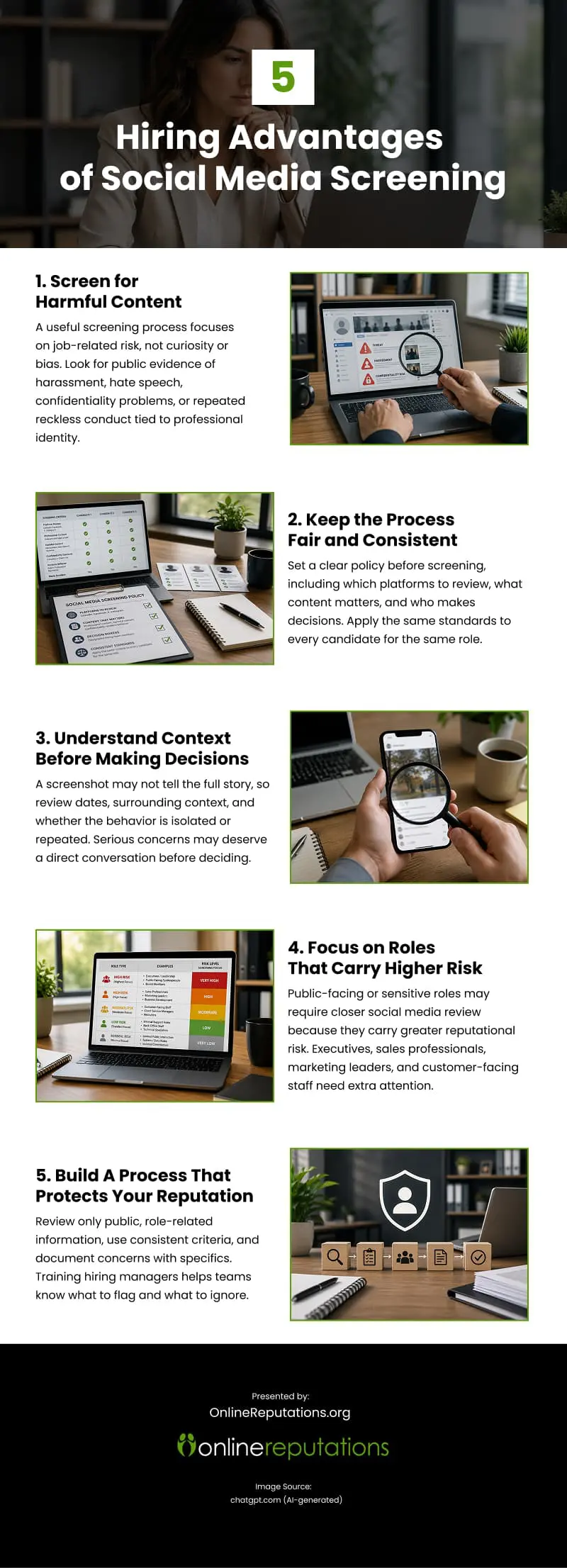
A social media review can surface concerns that never come up in an interview. Public posts sometimes reveal patterns such as harassment, discriminatory language, threats, or repeated poor judgment, and those signals matter because one employee’s behavior can quickly shape how people see your company. The key is a clear, consistent process that stays fair. Focus on job-related risk, not curiosity or bias. Look for public evidence of harassment, hate speech, confidentiality problems, or reckless conduct tied to someone’s professional identity. Set your policy before you start. Decide which platforms to review, what content matters, and who makes the call, then apply the same standards to every candidate for the same role. Context counts, too. A single screenshot rarely tells the whole story, so check dates, surrounding details, and whether the behavior is a one-time slip or a habit. Serious concerns may deserve a direct conversation before you decide. Pay extra attention to higher-risk roles. Executives, sales professionals, marketing leaders, and customer-facing staff carry more reputational weight, so they warrant a closer look. Build a process that protects your reputation. Review only public, role-related information, use consistent criteria, and document concerns with specifics. Train your hiring managers so everyone knows what to flag and what to safely ignore.
source: https://www.onlinereputations.org/social-media-screening-guides-company-hiring-decisions/
Comments
Download this infographic.