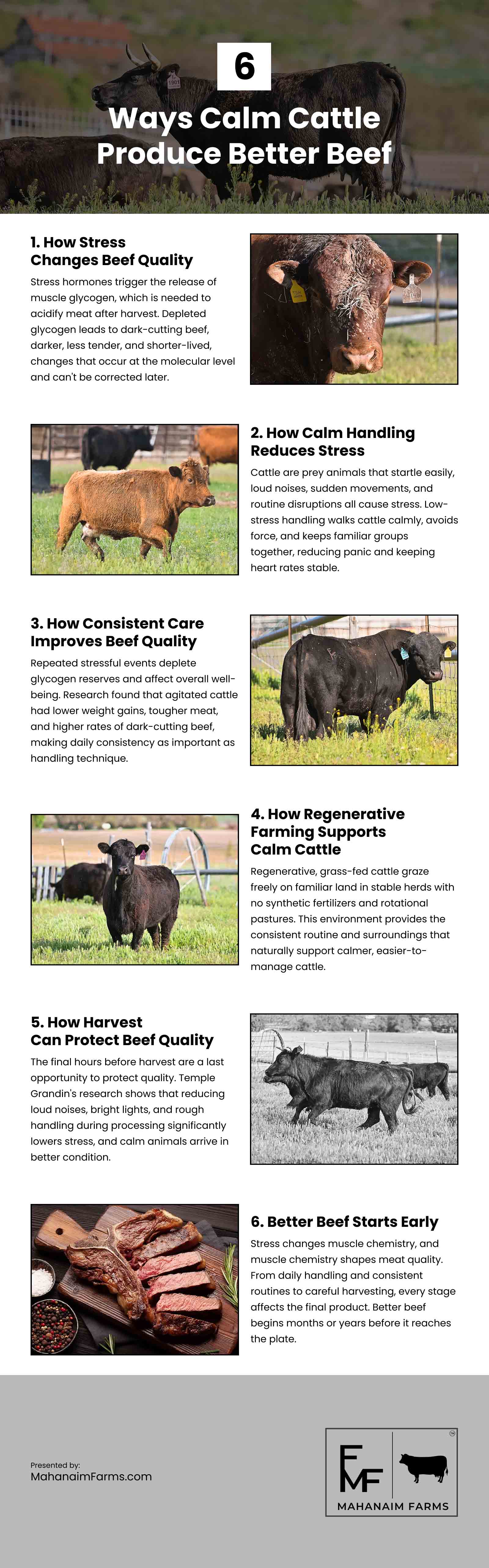
The quality of beef is shaped long before it reaches a plate, and stress is one of the most significant factors in that process. When cattle experience stress, hormones trigger the release of muscle glycogen — the stored energy that acidifies meat after harvest and gives it its color, tenderness, and shelf life. Depleted glycogen leads to dark-cutting beef, a condition that can’t be corrected once it occurs. Low-stress handling prevents this by keeping cattle calm through quiet movement, familiar groupings, and avoiding sudden disruptions. Consistent daily care matters equally, since repeated stressful events compound over time and affect overall meat quality. Regenerative, grass-fed farming supports calmer cattle by providing stable herds, familiar land, and rotational grazing that works with natural behavior rather than against it. Even harvest day presents a final opportunity — research by Temple Grandin shows that reducing noise and training handlers reduces stress at the processing stage. Better beef begins with better animal care at every step.
source: https://www.mahanaimfarms.com/why-calm-cattle-produce-better-beef/
Comments
Download this infographic.